Vegan Spinach, Mushroom and Red Bell Pepper Tamales

Yield: 14 tamales

Everyone loves to open a package, especially an edible one. Tamales are some of the tastiest—and easiest —savory packages to prepare. If you can tie a knot, you can make a tamale.

Heretofore, daunted by what seemed like too much work with an uncertain outcome, specialty ingredients, and the astounding amount of shortening recommended for the masa dough, I was recently encouraged to give tamales a try by an article in Food Network Magazine. In it, culinary star Ingrid Hoffmann shared her recipe for shortening-free tamales in which the dough and filling ingredients are combined instead of layered with moisture provided by prepared green salsa. Rather than masa, her recipe calls for ordinary self-rising cornmeal mix and she even demonstrated how tamales can be made in tin foil if corn husks aren’t available.

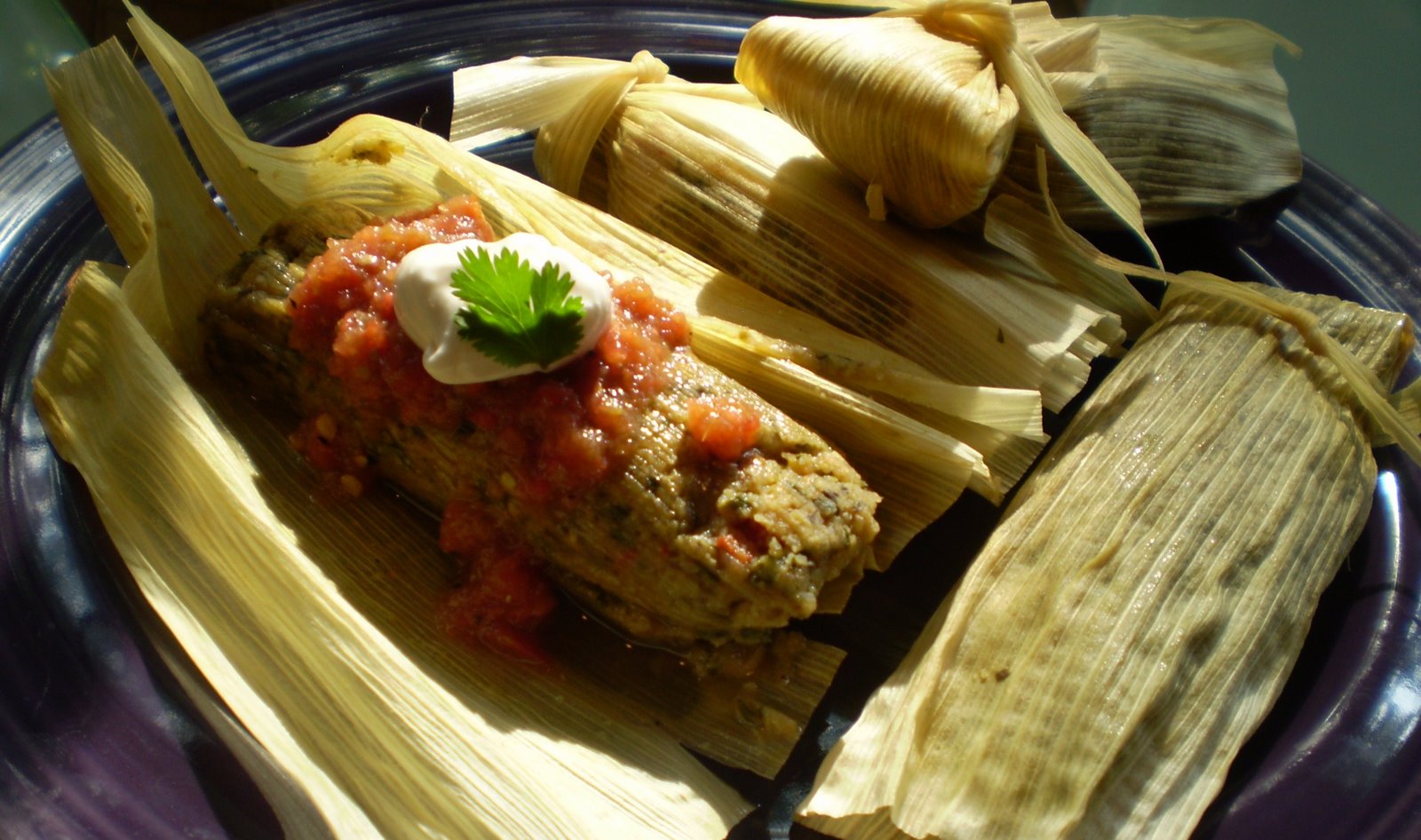
Though Hoffman’s Caribbean-inspired version sounded delicious, I sought a meat-and-cheese-free version with more traditional southwestern flavors, even if the approach was not completely authentic. After one dense, dry, flavorless flop, I conducted a little more research and a little more brainstorming, ultimately creating these moist bundles, bursting with flavor, color and nutrition from lots of vegetables, including cream-style corn for extra moistness, salsa and spices. A duet of ultra-simple sauces plus a sprig of cilantro crowns the tamales in the colors of the Mexican flag.

Approximately 20 corn husks (as some may split), available at local tiendas or Hispanic markets (or 14-6×8-inch squares of foil)
2 tablespoons corn, canola or olive oil
1 cup medium-fine diced yellow onion (approximately one medium onion)
1 cup medium-fine diced red pepper (approximately one medium pepper)
2 cloves garlic
8 ounces white or portabella mushrooms, wiped clean, and chopped very fine in food processor
2 teaspoons kosher salt (or to taste)
Freshly ground black pepper to taste
2 teaspoons ground cumin
1 teaspoon ground coriander
1 teaspoon sweet paprika
½ teaspoon dried oregano
¼ teaspoon smoked paprika
6 ounces ready-to-eat baby spinach, chopped very fine in 3 batches in food processor
¼ cup finely chopped fresh cilantro
Zest of one medium-large lime (save skinless lime for white sauce)
1-14.5 ounce can cream-style corn
½ cup prepared mild green salsa (salsa verde)
Optional: 2 tablespoons nutritional yeast (imparts a subtle “cheesy” flavor and a nutritional boost; available at health food and organic food stores; if omitted, you may need to add 2 additional
tablespoons cornmeal mix)
1/1/3 cup yellow self-rising cornmeal mix

Fill a large mixing bowl with hot water and separate husks into bowl, submerging them with a plate. Allow to soften for 30-45 minutes. Meanwhile, heat oil in a large cast iron skillet over medium-high. Add onion and bell pepper, and sauté, stirring frequently, until onion is softened and starting to turn golden. Add garlic, mushrooms, salt, pepper and spices, and sauté, stirring frequently, for a few minutes or until garlic and mushrooms are softened and starting to break down. Remove from heat and stir in remaining ingredients, except cornmeal mix. Taste and adjust seasoning if necessary. Then stir in cornmeal mix until well-combined. (The latter is not very tasty raw.) The consistency should be similar to a juicy brownie batter. Tear 3-4 of the corn husks into 1/4-inch wide strips and double-knot two strips together, overlapping ends by about 1 ½ inches. Set aside. Working with one corn husk at a time, remove it from the water onto a kitchen towel, wide end up. Spoon approximately 3 tablespoons of filling (4 for really large husks) into a 1½ x 4” long log-shape in the center of the husk, starting about ¼-inch from top edge and stopping about 2/3 of the way down. Fold one side of husk snugly over filling, and repeat with the other side. Hold husk in place while you fold the bottom third up. Still holding husk to prevent it opening, slip a knotted strip under the tamale, bring ends of strip up and over the front of the tamale and double-knot to hold folded end in place. Set aside, slightly propped up if necessary to prevent filling from spilling out. (Use the same procedure if using foil, but skip the tying step.) Repeat with remaining husks and filling. When about halfway through, fit a deep pot with a steamer, run water just to the underside of the steamer, cover tightly, and place over medium-high heat. When all tamales have been tied, remove pot lid carefully to allow steam to escape and place tamales into steamer as vertically as possible, leaning them against the sides of the pot and each other. Reduce heat to medium, replace lid and steam for 30-45 minutes or until just firm. Remove lid and use tongs to carefully remove tamales to a platter or plates. Allow to rest for 5 minutes before serving warm with sauces and fresh cilantro. Diners should remove ties, open husks, top as desired, and eat tamales while resting on husks, but they should not eat the husks themselves.

Red Sauce

½ cup prepared mild green salsa
2 Roma tomatoes, rinsed, dried and quartered
Kosher salt and freshly ground black pepper to taste

Process together in the bowl of a food processor until chunky-smooth. Pour into a small dish and pass for spooning over opened tamales. You may heat sauce if desired.

White Sauce
½ cup vegan sour cream (dairy sour cream may be substituted)
Juice of one medium-large lime
Kosher salt and freshly ground black pepper to taste

In a small bowl, whisk together until well combined. Pass for dolloping on top of Red Sauce.

Garnish: whole or chopped fresh cilantro sprigs

Vegan Fancy Franks–Perfect for the Fourth of July

Yield: 8 hot dogs

You’ll love my “twist” on the traditional hot dog just in time for Independence Day in the U.S. Think “Pigs in a Blanket” kicked up a notch with the help of puff pastry dough. Once baked, they look really cute served upright in a wine glass, but they didn’t photograph too well like that. Regardless of how you serve them, guests of all ages will salute you. For adults only, I recommend accompanying them with Margarita Mayo and Pina Colada Catsup. It’s true that mayonnaise isn’t a traditional condiment for dogz, but something about the buttery “bun” contrasting with the tart lime makes for a delicious combination in this case. I also tried a Mojito Mustard, but lime, never mind mint, isn’t too tasty with mustard. A Mango Mustard, however, sounds marvelous. If you experiment with sauces, please share your results. Happy Fourth of July!

8 vegan hot dogs
1 sheet Pepperidge Farm puff pastry, thawed according to package directions

Preheat oven to 400 degrees. Line a baking sheet with a Silpat sheet or apply nonstick spray sparingly. Slice puff pastry into 8 equal strips. Working with one dog at a time, wind and spiral the dough down the length of the frank making sure to gently press the ends of the strip of dough against the underside of the dog at both ends. You may need to slice about an inch off of each piece of dough, depending on the size of your hot dogs. Place the dog on the baking sheet and repeat with remaining franks and dough, leaving a couple of inches between each one. Bake for approximately 22 minutes or until golden, but start checking after about 15. Serve warm or at room temperature with the condiments of your choice. I particularly like the following:

Pina Colada Catsup

1/4 cup catsup
2 teaspoons Cream of Coconut
2 teaspoons pineapple juice
2 teaspoons rum (I used a golden variety)

Whisk all ingredients together and serve or store in an airtight container in the refrigerator.

Margarita Mayo

1/4 cup vegan mayonnaise
2 teaspoon fresh lime juice
2 teaspoons tequila
2 teaspoons VERY loosely packed lime zest (approximately the zest of one small lime)
pinch salt

Whisk all ingredients together and serve or store in an airtight container in the refrigerator.
Note: for a pretty and authentic Margarita presentation, you can dip the rim of a small glass or glass bowl in fresh lime juice and then in salt before filling with the mayo.

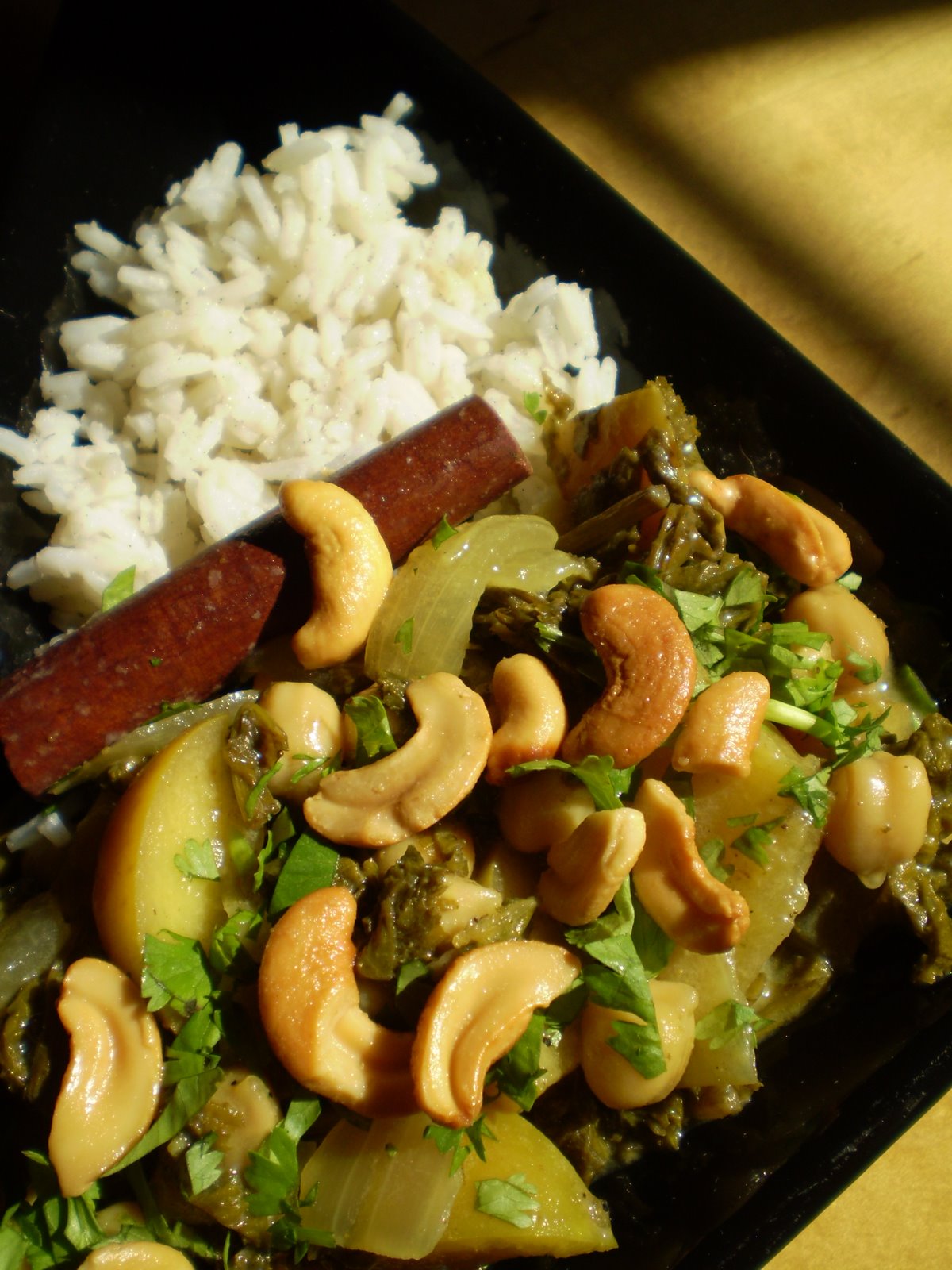
Vegan Coconut Curried Mustard Greens with Apples and Chick Peas over Cinnamon-Cardamom Rice

Yield: approximately 4 servings

They don’t call them “bitter greens” for nothing! I love mustard greens, but only with the bitterness dialed back. Coconut milk, apples and chick peas do the trick in this recipe, especially when served with Cinnamon-Cardamom rice.

Coconut Curried Mustard Greens with Apples and Chick Peas:

1 tablespoon olive oil
1 medium yellow onion, slivered
2 Fugi apples, halved lengthwise and cut into 1/4″ wedges (use whatever kind of apple you like, but Fugis are particularly good with savory dishes)
8 ounces mustard greens, coarsely chopped (I purchase them already chopped and ready-to-eat)
kosher salt and freshly ground black pepper to taste
1/2 of a 14.5 ounce can of coconut milk
1 teaspoon curry powder
1/4 teaspoon ground cumin
1/8 teaspoon ground coriander
1/2 of a 14.5 ounce can chick peas, drained (add them all if you prefer)
1/2 teaspoon fresh lemon juice

Garnish: approximately 4 tablespoons lightly salted cashew halves and 4 teaspoons chopped fresh cilantro or 4 cilantro sprigs

In a large wok or Dutch oven over medium-high, heat the olive oil. Add the onion and saute, stirring frequently, until it starts to soften. Add apples, and continue sauteing just until they start to soften. Add the greens and cook for a few minutes or until they wilt and begin to tenderize. Add remaining ingredients, except chick peas and lemon juice, and cook for at least 10 minutes and probably more until greens are tender and have lost most of their bitter bite. (Unfortunately, this means they will lose their brilliant green color.) Stir in chick peas, heat through, and then stir in lemon juice. Serve garnished with cashews and cilantro over or alongside Cinnamon-Cardamom Rice.

Cinnamon-Cardamom Rice:

3 cups water
1 teaspoon kosher salt
1 stick cinnamon, broken in half
a few cardamom pods (about 1 tablespoon)
1 cup basmati rice

In a medium saucepan over medium-high heat, bring all ingredients except rice to a gentle boil. Add rice, stir once, cover loosely with a lid, reduce heat if necessary and simmer for approximately 20 minutes or until water is absorbed and rice is tender. Watch closely so that rice doesn’t scorch or stick to the bottom of the pan.

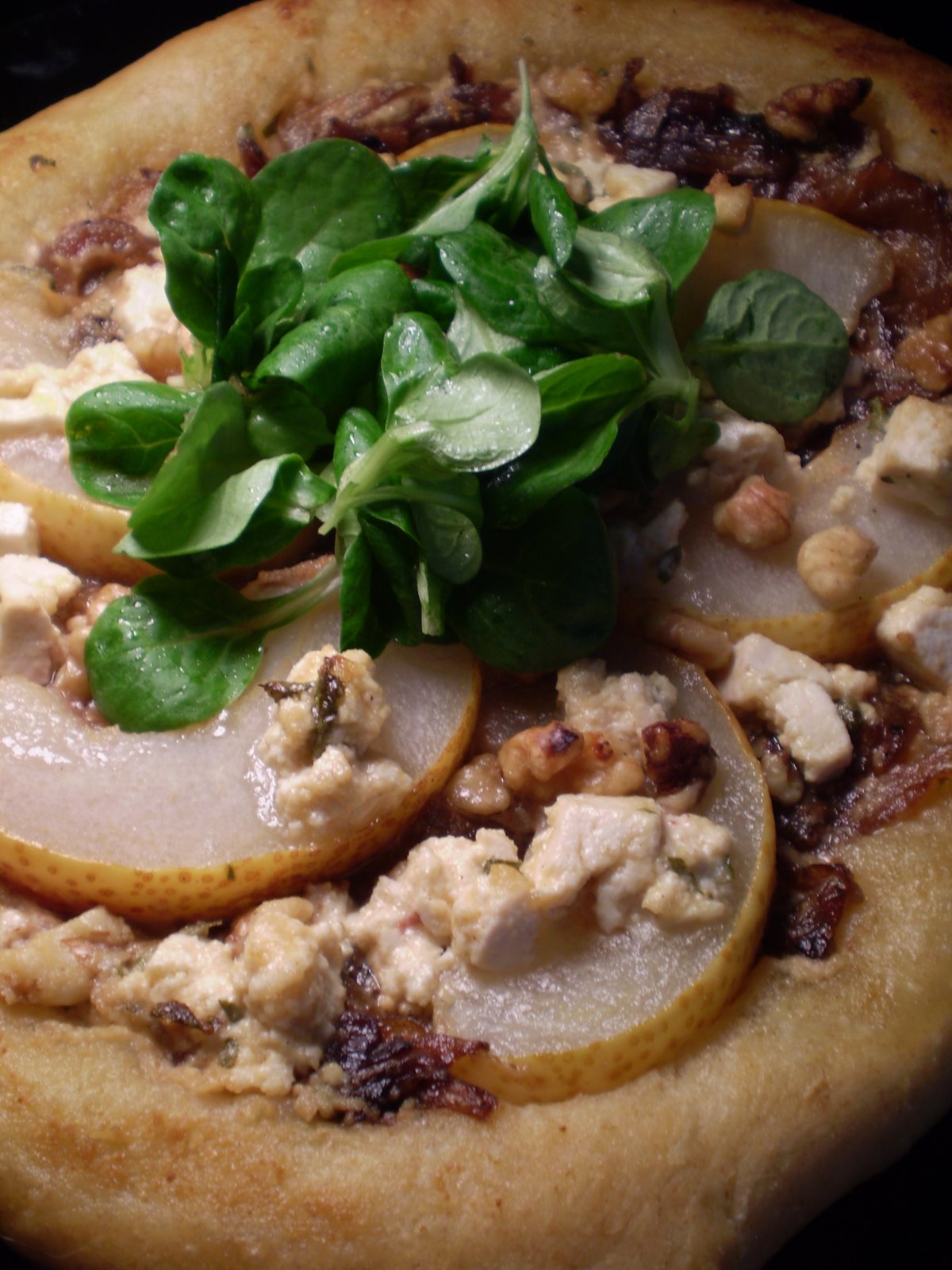
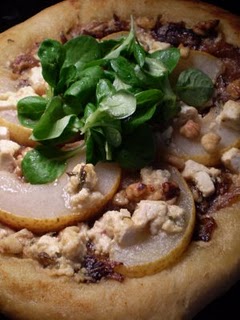
Vegan Caramelized Onion, Poached Pear, Bleu "Cheez" and Walnut Pizza

Yield: two 8-9″ pizzas

I created this classic pizza by special request from my foodie pal Anne who felt that the combination of pear and caramelized onions in renditions she had tasted was too sweet, never mind the little challenge of vegan blue “cheez.” Plus, the perfect crust was eluding her.

By poaching the pears in wine and lemon juice and by choosing a white onion (with a little more bite than yellow or red) and adding a little balsamic vinegar to it as it cooked, I toned down the sweetness factor just enough. I also topped the pizza with a mini-salad of mache (nice nutty flavor) tossed with a tiny bit of fresh lemon juice and olive oil. That also subdued the sweetness, in addition to being a lovely contrast in color and texture.

I had an inspiration for the blue “cheez” that worked beautifully. I am a big fan of my very slightly adapted version of Jo Stepaniak’s blue “cheez” dressing and had some in my fridge. But I wanted the top of the pizza to look pretty with little melty hunks on it rather than a drizzled sauce. So, I also had some pre-cubed super-firm (or extra-firm) tofu in the fridge. It occurred to me that I could use my fingers to gently mash the tofu–just so the pieces weren’t so geometric and uniform–with a little of the dressing. I tried it and presto!, I had blue “cheez.” For the crust, I used a California Pizza Kitchen recipe I found online. It was intended for ultra-thin crust pizzas, so I just omitted the rolling step to keep it a little thicker and it was a winner.

I thought the end result was pizza perfection and so did my meat-and-potatoes-minus-the-potatoes husband!

Please don’t be deterred by the seeming length of the instructions. It all goes quickly, as you can prepare virtually all of it simultaneously–you can even make the bleucheez” dressing in advance–and it is SO worth it. Certainly, if you want to forgo poaching the pears and opt for a commercial crust, do. I can’t vouch for the results, but if time is a big factor, why not try it?

Rosemary Olive Oil for Brushing on Pizza:

1/4 cup olive oil
1-2 stalks of fresh rosemary

Pour olive oil into a small cup or bowl. Gently crush leaves of rosemary with your fingers and add to the olive oil. Set it aside on the counter until ready to use. The longer it steeps, the more intense the rosemary flavor will be.

Creamy Blue “Cheez” Dressing

½ cup sesame tahini
½ cup extra virgin olive oil
1 ¼ teaspoons salt
1 teaspoon crushed garlic or garlic powder
1 teaspoon light miso
¼ teaspoon pepper (I use white to prevent black flecks)
¼ cup lemon juice
¼ cup white vinegar
1 tablespoon dried parsley flakes or 3 tablespoons fresh minced parsley

In a medium bowl or food processor, beat together first 6 ingredients until creamy and smooth. Vigorously beat in lemon juice and vinegar until well combined. Stir in parsley or add a very small rinsed and drained bunch to the food processor and pulse a few times to mince and distribute. Keeps 10-14 days in an airtight container in the refrigerator. Stir well before serving.

Dressing Source: slightly adapted from The Ultimate Uncheese Cookbook by Jo Stepaniak (the only changes I made were to omit all of the water, as it made the dressing far too thin, and add more parsley).

CPK’s Pizza Dough:

1 teaspoon “quick rise” or “rapid rise” yeast
1 3/4 cup unbleached bread or all-purpose flour (I used all-purpose)
2 tablespoons whole wheat flour
1 teaspoon granulated or raw sugar
1 teaspoon kosher salt
3/4 cup + 1 1/2 tablespoons tepid water (“quick rise” yeast does not need the traditional soak in warm water to activate it)
2 teaspoons extra virgin olive oil

You may use a stand mixer (fitted with a paddle rather than a hook for this small amount of dough), a food processor or your hands. If you use a processor, use a plastic rather than a metal blade, as the latter will cut through the gluten strands preventing a proper rise. Place all dry ingredients in the appropriate bowl. Add water and 1 teaspoon olive oil and beat for 2-3 minutes on medium-low until dough is smooth and elastic; or process just until the dough forms a smooth ball; or knead 5 minutes with oiled hands or until smooth and elastic, but slightly sticky. Do not overbeat/over-knead. Pour remaining teaspoon of olive oil into a mixing bowl and spread with your fingers. Place ball of dough into the bowl and move it around to coat the underside and then flip over and do the same to the other side. Cover loosely with a damp kitchen towel and allow to rise until doubled in bulk about 2 hours. While dough rises, prepare other ingredients.

Note: If you have regular active dry yeast, dissolve it first in the water before adding to the dry ingredients. The water should be 105-110 degrees; any hotter will kill the yeast and prevent rising.

Caramelized Onions

2 tablespoons olive oil
1 very large white onion, sliced into slivers
kosher salt to taste
1 tablespoon water
2 tablespoons balsamic vinegar

In a large cast iron skillet over medium-high, heat 1 tablespoon of the olive oil. Add onion and some salt and saute, stirring frequently, until onions begin to turn golden. You may need to lower the heat to just above medium to prevent scorching. Add another tablespoon of oil and check for salt. Continue to saute until onions darken a bit more and oil is mostly absorbed. Add a tablespoon of water and continue cooking until onions turn amber. Add balsamic vinegar and cook until onions are a deep amber. Remove to a bowl to cool. While onions caramelize, poach pears.

Poached Pears:

2 cups Gewurtraminer (a slightly sweet white wine; a reisling might work nicely too)
4 1/4-1/2″ thick slices of lemon
2 teaspoons fresh lemon juice
1 teaspoon white or white wine vinegar
kosher salt to taste
1 large Asian pear (I used one almost the size of a small grapefruit. If using a smaller or different kind of pear, you will need two to make a total of 16 slices)

Combine all ingredients except pear in a large cast iron skillet. Bring to a simmer over medium-high heat. Half pear lengthwise, core it and slice each half into approximately 1/3″ thick wedges. Place into poaching liquid in one layer and cook for about 8 minutes. Turn slices and poach for another 8 minutes just until tender. Adjust temperature as needed to keep liquid at a slow simmer. Remove pear slices to a paper towel-lined plate to cool.

Shape Dough:

Before beginning, preheat oven to 450 degrees. Place two pizza stones inside and heat them for approximately 30 minutes. Divide dough in half, shape into a ball, dust lightly with flour, and place in the center of a lightly oiled piece of foil about 10 inches square, shiny side down. Beginning in the center and working your way to the edges, use your fingertips to gently press and stretch dough into an 8-9″ circle with a slightly raised rim. Repeat with other half of dough. While stones are heating, make Blue “Cheez” Hunks and have walnuts at the ready.

To Make Blue “Cheez” Hunks:

1/2 cup super-firm or extra-firm tofu cubes
1 scant tablespoon Creamy Blue “Cheez” Dressing

With your fingers, gently break up tofu and lightly mash together with dressing just so that hunks lose their geometric and uniform appearance.

Topping:

3-4 tablespoons walnut pieces

Assemble and Bake Pizzas:

Spread a few tablespoons of the remaining dressing on each crust to make a very thin layer, leaving a one-half inch margin. Top evenly with caramelized onions, using half of the onions on each pizza, followed by 8 pear slices per pizza in a pinwheel design. Dot each pizza with half of the blue “cheez” hunks and sprinkle with half of the walnut pieces. Using oven mitts, remove pizza stones from the oven. Carefully slide each pizza, foil and all, onto its pizza stone. Return to the oven and bake approximately 11 minutes. Halfway through the baking time, open the door, slide racks out, and carefully brush the edges of the crusts with the rosemary olive oil and dot over pizzas, especially over the walnuts. While pizzas bake, make mache salad (below). When crust is just golden, remove pizzas from oven. Allow to cool for a few minutes and then slide off of foil onto serving platters, using a spatula to assist, if needed. Place a little mound of mache salad in the center of each pie and serve warm.

Mache Salad

2 small handfuls mache greens
1 teaspoon lemon juice
2 teaspoons olive oil

Toss together gently and place half of the mixture in the center of each pizza.
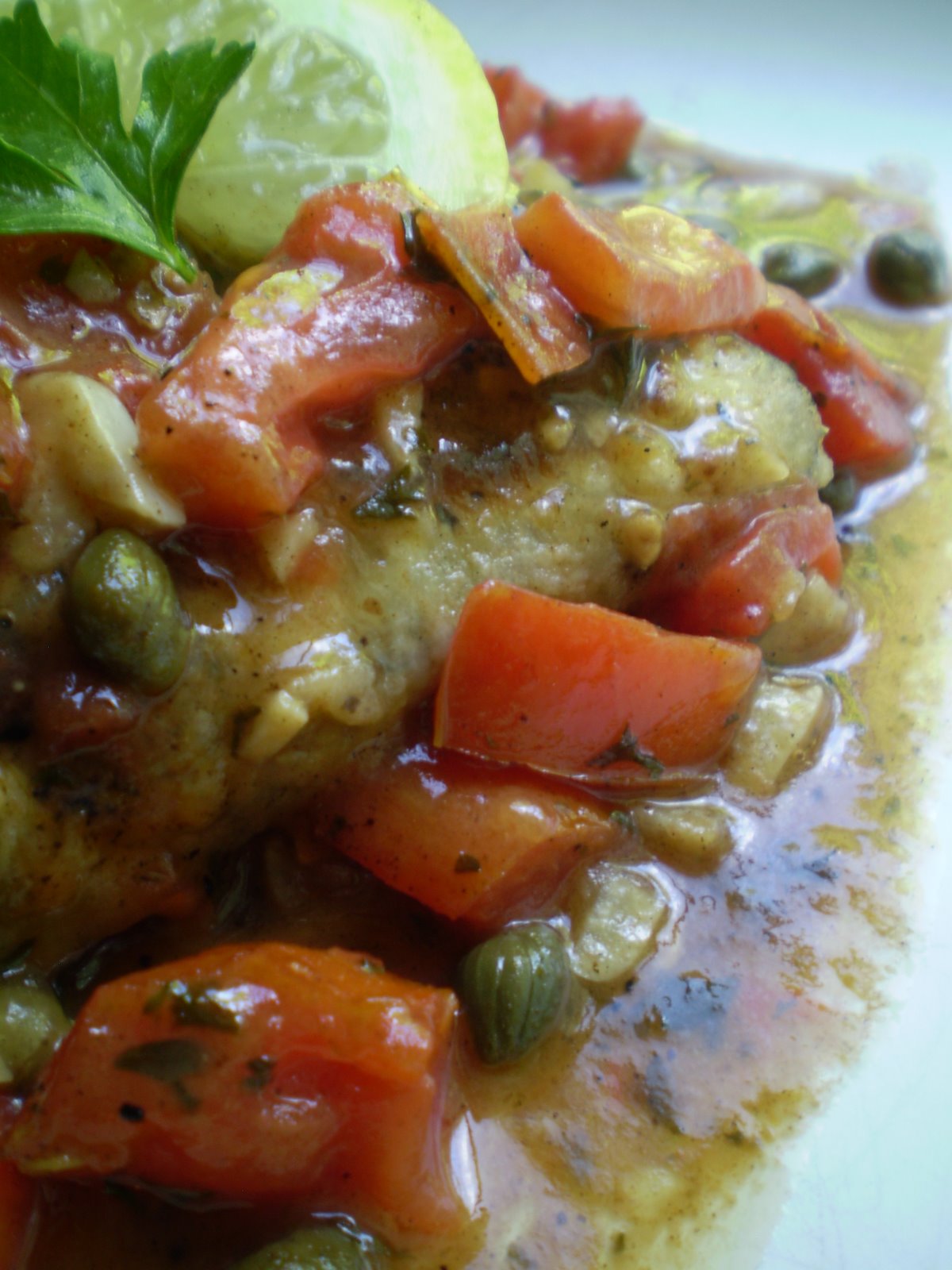
Vegan Tempeh with Wine-Tomato-Caper Sauce

Yield: 4 servings

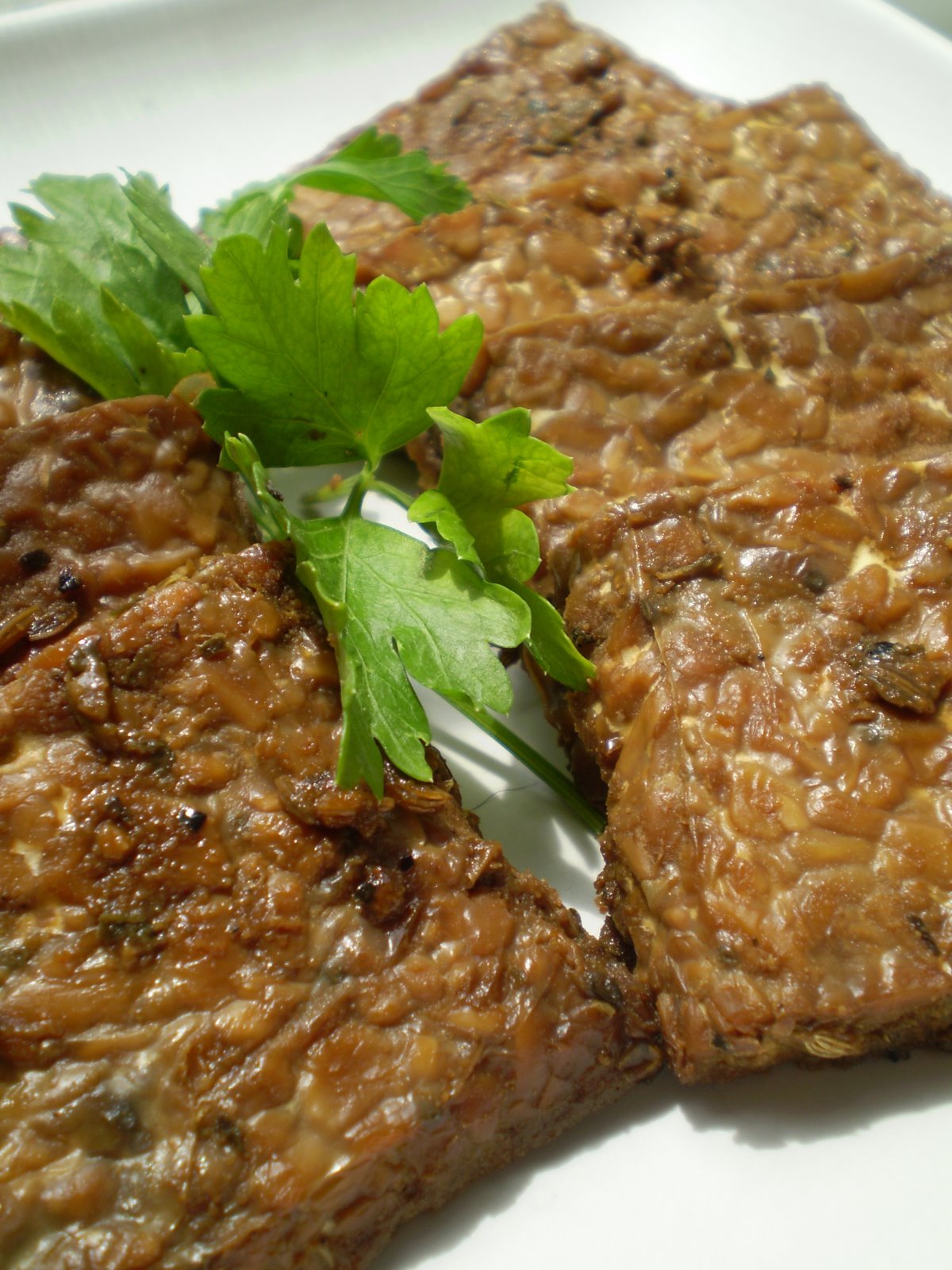
I could eat this sauce alone, as it is simply to die for. But it is perfect over the tempeh. I’ve made a somewhat similar vegan piccata sauce previously, but it missed the mark, as the flavors weren’t balanced. I experimented and found that the addition of Amino Acids, brown rice syrup and just a hint of lemon juice to a fairly sweet wine made it perfect. The garlic, tomatoes, capers and parsley put it right over the top in terms of taste, color and nutrition. I labeled this recipe under Sauces, as well as under Tempeh and Main Dishes, because it would be delicious with anything, including a spoon!


For this recipe and some 170+ more,
I invite you to purchase my first cookbook:

The Blooming Platter:
A Harvest of Seasonal Vegan Recipes

Vegan Heritage Press
Spring 2011

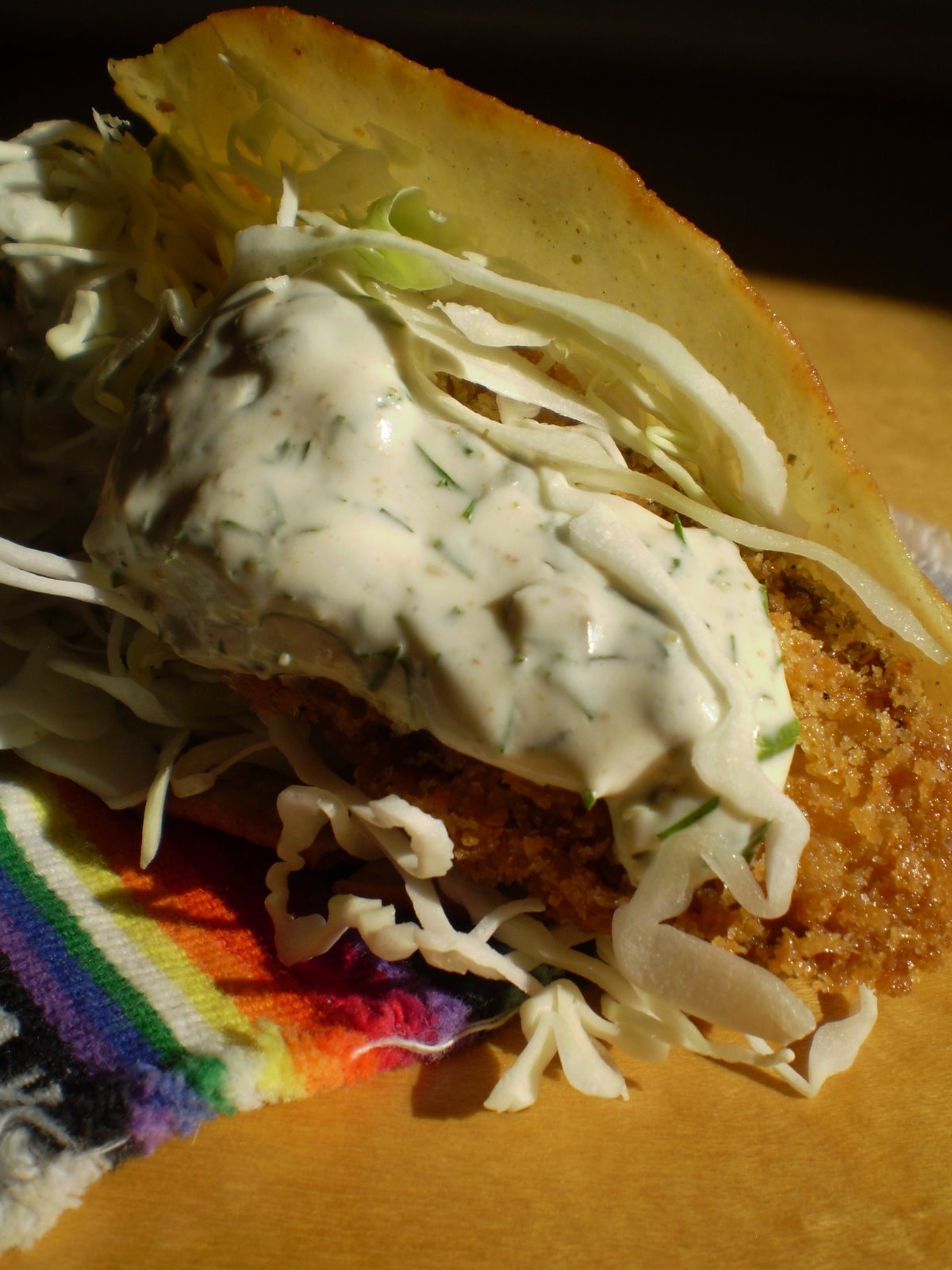
Vegan Fish Tacos

Yield: 4 Tacos

Few things suggest summer in warm coastal areas more than fish tacos. One bite and you can almost feel the ocean breezes. For the uninitiated, a fish taco consists of a crispy-chewy fried corn tortilla folded around beer-battered fish fillets, finely shredded cabbage and a creamy sauce redolent of capers and cumin. In my vegan version, “seafood” seitan replaces the fish. While seitan cannot be described as “white and flaky” like the cod typically used in fish tacos, when all of the other components meld together with the seitan, the result is just as tasty. Though traditional fish tacos are beer battered (as in this photo), if you prefer your fried foods breaded, I include directions for breading inspired by the way my parents fry fish (see photo in the subsequent post). They dip the fillets in yellow mustard and then in flour or cornmeal. (I use Panko bread crumbs for extra crispiness.) You can’t believe how juicy and flavorful the “fish” is without tasting like a hot dog. If you choose to batter your fillets, they will feel a little “sturdy” when you remove them from the oil. However, when you bite into them, they will taste light. Don’t be put off by what seems like long instructions. These tacos are really very simple and quick once the seitan is cooked, despite the number of steps.

For this recipe and some 170+ more,
I invite you to purchase my first cookbook:

The Blooming Platter:
A Harvest of Seasonal Vegan Recipes

Vegan Heritage Press
Spring 2011

Vegan "Cheese," Caramelized Onion and Fresh Spinach Quesadillas

Yield: approximately 2 1/2 cups of “cheese” spread

This recipe is a “two-fer,” as it includes both my white bean “cheese” and directions for making one of my favorite quesadillas.

Vegan block cheeses are available, but I’ve yet to find one I particularly care for other than a passable feta. So, thanks to inspiration from Jo Stepaniak’s The Ultimate Uncheese Cookbook, I’ve enjoyed experimenting with a variety of vegetables, beans, nutritional yeast, miso and other ingredients to create spreads that have a deep cheesy flavor, a nice consistency, and can often be substituted for grated block cheese. Because this particular one is made with beans, I like it especially well in quesadillas.


For this recipe and some 170+ more,
I invite you to purchase my first cookbook:

The Blooming Platter:
A Harvest of Seasonal Vegan Recipes

Vegan Heritage Press
Spring 2011

Vegan Chana Dal

Yield: 4 servings

I love the mellow undertones of this tangy dish. Plus, it’s pretty as a picture and ultra-healthy to boot.

1 tablespoon olive oil
1 cup onion slivers
2 cloves garlic, minced
1-14.5 ounce can garbanzo beans
1-14.5 ounce can petite diced tomatoes in juice
juice of ½ lemon
salt to taste
½ cup water
1-2 teaspoons garam marsala (a spice blend available in Indian markets and some supermarkets or you can make your own; recipes abound)
1 small cinnamon stick

Garnish:
Cinnamon stick
Sprig of fresh cilantro

In a large skillet over medium-high, heat oil to sizzling. Add onion and saute, stirring frequently, until onion begins to turn golden. Add butter and continue sautéing and stirring frequently until onion turns a rich golden brown. Add garlic and cook, stirring frequently, for 2-3 minutes. Stir in garbanzo beans, tomatoes and lemon juice. Season with salt. Simmer, stirring frequently, until tomatoes cook down a little and most of moisture is absorbed. Add water, garam marsala and cinnamon stick and cook, loosely covered, until mixture cooks down and most of additional moisture is absorbed. “Fish” out the cinnamon stick and serve hot or warm garnished with it and a spring of fresh cilantro.

Related Posts Plugin for WordPress, Blogger...
Site developed by IYPS

Featuring Recent Posts WordPress Widget development by YD