Vegan Peanut Butter-Chocolate Chip Cookies

Yield: approximately 8 mega cookies or 20-24 normal size

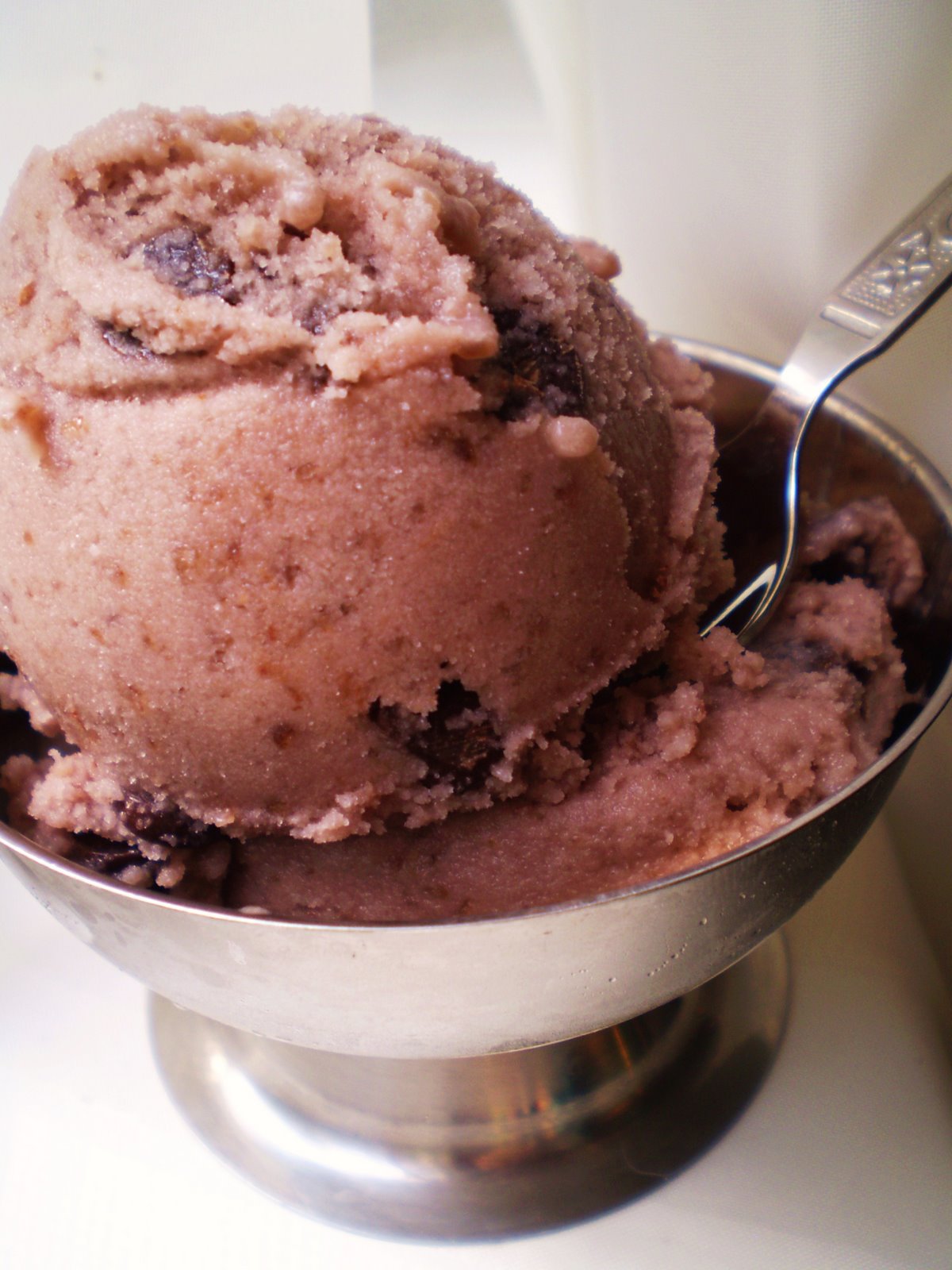
I met Reannon Peterson, the creator of my inspiration recipe, a couple of years ago when I consulted with her for “Vegan 101,” a story I wrote for The Virginian-Pilot. She was and is employed by PETA, though she recently returned to school and has almost earned her teaching license. (What a great addition to the profession she will be!) You can find her original recipe, known as “RP’s Famous Peanut Butter-Chocolate Chip Cookies,” at http://vegcooking.com/. One taste and you’ll know why they’re famous. I didn’t monkey with her recipe too much, but I did add almond extract, as I think it deepens the peanut butter flavor, making it a little more complex. I also substituted 1 cup of the flour with whole wheat flour. And finally, I omitted the tiny bit of water in the original recipe, gave a more specific amount of soy milk and added more chocolate chips. You’re sure to enjoy either version whether raw–the dough is irresistible–or cooked.

1 cup peanut butter (preferably, non-hydrogenated), creamy or crunchy
1/4 cup vegan butter (I like Earth Balance)
1 teaspoon vanilla
½ teaspoon almond extract
½ cup granulated sugar or raw sugar
½ cup brown sugar
½ cup unbleached all purpose flour
1 cup whole wheat flour
3/4 teaspoons baking soda
1/2 teaspoon salt
1/3 cup unsweetened soy milk
6 ounces vegan (non-dairy) chocolate chips

Preheat the oven to 350°F. Lightly grease a baking sheet or line with Silpat. (If making normal size cookies, use two baking sheets.) In a large mixing bowl at medium-high speed, cream together the peanut butter, butter, vanilla, and almond extract. Add the sugars and continue creaming until fluffy. With the mixer on low speed, mix in flours, baking soda, salt and soy milk. Dough should be soft enough to hold its shape, but not sticky. If too stiff, add more soy milk, a teaspoon add a time until desired consistency is reached. When almost combined, add chocolate chips and mix until all ingredients are well combined and chips well distributed. Avoid over-mixing.

For mega cookies, use an ice cream scoop to make 8 mounds of dough, about two inches apart, in three staggered rows on one cookie sheet. (To make normal size cookies, use a small scoop to make 20-24 mounds of dough, divided between two baking sheets.) Flatten each scoop to approximately one-third of an inch thick using your fingers. Press fork tines lightly into dough first in one direction, then turn the fork 90 degrees and press again to make a classic criss-cross design. If fork sticks, dip in flour or spray with non-stick spray. (For mega cookies, press fork two to three times, side by side, in one direction to nearly cover surface before turning 90 degrees and repeating.)

Bake mega cookies for 13-15 minutes and normal size cookies for 8 to 10 minutes or until the edges are golden, rotating sheets halfway through. Be careful not to over bake. Cool cookies slightly on trays until they hold their shape, then remove to a wire rack to cool completely. Store in an airtight container.

Source: Slightly adapted from Reannon Peterson at http://vegcooking.com/

Vegan "Cheese," Caramelized Onion and Fresh Spinach Quesadillas

Yield: approximately 2 1/2 cups of “cheese” spread

This recipe is a “two-fer,” as it includes both my white bean “cheese” and directions for making one of my favorite quesadillas.

Vegan block cheeses are available, but I’ve yet to find one I particularly care for other than a passable feta. So, thanks to inspiration from Jo Stepaniak’s The Ultimate Uncheese Cookbook, I’ve enjoyed experimenting with a variety of vegetables, beans, nutritional yeast, miso and other ingredients to create spreads that have a deep cheesy flavor, a nice consistency, and can often be substituted for grated block cheese. Because this particular one is made with beans, I like it especially well in quesadillas.


For this recipe and some 170+ more,
I invite you to purchase my first cookbook:

The Blooming Platter:
A Harvest of Seasonal Vegan Recipes

Vegan Heritage Press
Spring 2011

Vegan Deconstructed Chili Salad

Yield: 8 servings (easily halved)

With summer almost here, my thoughts have turned to refreshing, but hearty salads (though I’m also pretty likely to crave cold weather foods in July). It occurred to me that all of the ingredients for a vegan chili would make a delicious salad: hence the reference to “deconstruction.”

The salad’s key ingredients are red kidney beans, tomatoes, bell pepper and red onion. The dressing includes a spice mixture similar to what I use in chili. If you use yellow bell pepper and dried instead of fresh oregano, you may want to add a tablespoon of minced fresh parsley or cilantro for some flecks of green throughout the salad. For the acid in the dressing, I chose red wine and lime juice, as I like a little red wine in my chili and I like to serve bowls of chili with wedges of lime. Because I chose to omit faux ground beef, which is ever-so-slightly sweet, I decided to add just a hint of sweetness to the dressing in the form of maple or brown rice syrup. Finally, one of my favorite vegan chili recipes calls for sunflower seeds so, here, I include them as a garnish.

Salad:
2-15 ounce cans Bush’s red kidney beans, rinsed and drained
2 cups grape tomatoes, sliced lengthwise
1/2 cup finely diced green or yellow bell pepper
1 ½ cups finely diced red onion
pinch of salt
pinch of freshly ground black pepper

Dressing:
1 teaspoon chili powder (I like Ancho chili powder)
1 teaspoon ground cumin
½ teaspoon garlic powder
½ teaspoon onion powder
½ teaspoon salt
scant 1/8 teaspoon cinnamon
scant 1/8 teaspoon allspice
1 tablespoon fresh minced oregano (or 1 teaspoon dried oregano)
1 tablespoon olive oil
1 tablespoon lime juice
2 teaspoons red wine
1 teaspoon maple or brown rice syrup
salt and freshly ground black pepper to taste, if needed

Optional garnish: a couple of tablespoons of roasted, salted sunflower seeds

Gently toss together salad ingredients in a medium non-reactive bowl and set aside. Combine all dry dressing ingredients in a small non-reactive cup or bowl. Whisk in wet ingredients. Drizzle over salad and gently toss one more time, adjusting seasoning with salt and pepper as needed. Sprinkle with sunflower seeds if desired just before serving.

Vegan White Bean and Sage Salad

Yield: 4 servings

This recipe was inspired by my dear friend Trish’s signature salad. Her food is always beautiful, fresh and healthful, like her. And it is often based on flavors of the Mediterranean. Though I have made a few changes to what I remember her describing when I asked for the recipe after tasting the dish at a party, the essence is very similar.

Dressing:
1-2 tablespoons olive oil (start with one, add other ingredients, taste, and add another if desired)
1 teaspoon balsamic vinegar
1 teaspoon lemon juice
1 teaspoon maple syrup

Salad:
2-14.5 ounce cans cannelini or other white beans, rinsed and drained
1-2 tablespoons olive oil
1.3 ounces (2-.66 ounce packages) fresh sage, stems removed and very coarsely chopped; reserve 1 sprig for garnish
2 large garlic cloves, sliced and then finely chopped
pinch of salt
1/3 cup pitted black olives (I like the shriveled, oil-cured variety)
3 ounces pine nuts toasted in a dry skillet on top of the stove for a few minutes, stirring frequently; reserve approximately 2 tablespoons for garnish
optional: 2 tablespoons fresh or fresh frozen minced parsley
salt and freshly ground black pepper to taste

Garnish: zest of half a lemon plus reserved 2 tablespoons of toasted pine nuts and sprig of fresh sage

In a small non-reactive bowl or cup, whisk together dressing ingredients and set aside. Place beans in a medium non-reactive bowl and set aside. In a large skillet, over medium-high, heat 1 tablespoon olive oil. Add sage leaves, garlic, and a pinch of salt, and sauté, stirring continually, for a couple of minutes or until leaves darken slightly and become firmer and garlic softens. Do not let garlic brown. Spoon over beans and add black olives, all but reserved 2 tablespoons of pine nuts and minced parsley. Drizzle dressing over the salad and gently toss to coat. Check for seasoning and adjust with salt and freshly ground black pepper if needed. Toss again gently to distribute. Spoon into a shallow serving bowl, sprinkle with lemon zest and reserved pine nuts and tuck in a sprig of fresh sage. Serve at room temperature or ever so slightly warmed, rather than cold which robs the dish of its flavor.

Note: If not serving the salad immediately, toss the pine nuts in, adjust seasoning, and garnish just before serving to help the nuts maintain their crunch.

Vegan Soy Yogurt and Tea Pancakes

Yield: 6-8 pancakes

These delicious pancakes were born of necessity. After a congratulatory breakfast party for my AP and advanced art students, I had some berry-flavored soy yogurt left over. I’m not a big fan of it, as it’s a little runny for my taste, so I wanted to use it in a recipe. Since it was morning, pancakes seemed like a good option. I mixed together my usual dry ingredients and added a cup of the yogurt. The result was too thick for pancakes and I was about to add some soy milk when I saw a half cup of Tazo “Calm” tea left over from my morning brew. I remembered that I once had a “cooking with tea” type cookbook–I may still have it–and had always wanted to experiment more with tea as a recipe ingredient. So I stirred it in making the batter a perfect consistency. The flavors were subtle, compatible and lightly perfumed. Tea is a wonderfully versatile ingredient because you can control how potent it is and it is sold in a wide range of flavors. Enjoy mixing and matching various yogurts and teas, and please share any particularly scrumptious results.

2 scant tablespoons vegan butter (I like Earth Balance)
1/2 cup whole wheat flour
1/2 cup self-rising flour
1/2 teaspoon baking powder
1/4 teaspoon baking soda
1 cup fruit-flavored soy yogurt
1/2 cup brewed tea, at room temperature
Garnish: maple syrup and a compatible fresh fruit

In a large cast iron skillet over medium-high heat, melt 1 scant tablespoon of the butter. Meanwhile, in a medium bowl, stir together both flours, baking powder and soda. Make a well in the center and add soy yogurt and tea. Stir just until combined and few lumps remain. Using a 1/3 cup measure, make three pancakes (or a 1/4 cup measure to make 4 pancakes), spreading ever so slightly just to flatten tops. Cook a minute or two on the first side, gently flip and cook another couple of minutes on the reverse. Avoid overcrowding. If pancakes look like they are going to run together, just cook a couple at a time, and add butter to keep skillet greased as needed.(Note: Bubbles will not appear in this batter indicating doneness as with some pancakes. Instead look for a high rise and nicely set edges.) If pancakes are cooking too quickly, lower heat to medium, especially for second side. When cooked through, remove pancakes to plates or a serving platter, keep warm, and repeat with remaining scant tablespoon of butter and pancake batter. Serve with maple syrup and a fruit that complements your yogurt and tea combination.

Vegan Cornmeal-Whole Wheat Pancakes

Yield: 6-8 pancakes (or approximately 18 appetizer size)

These pancakes have the crispiest exterior and the tenderest interior imaginable. You might describe them as “fluffy,” except that the wonderful texture from the self-rising cornmeal mix and the whole wheat flour makes them so toothsome.

Plus, they are wondrously adaptable: sturdy enough to hold up to toppings like vegan barbecue but, even with a bare hint of garlic and onion, delicious topped with maple syrup and berries. In the summer, I love them with my Savory Strawberry Chutney and a spoonful of vegan sour cream. Made in miniature and crowned with a dollop of your favorite topping, they are delectable bite-sized appetizers. Let your creativity be your guide, and let the games begin!

13 tablespoons unsweetened soy milk (3/4 cup + 1 tablespoon)
3 tablespoons vinegar or apple cider vinegar
3 tablespoons vegan butter (I like Earth Balance)
½ cup self-rising cornmeal mix
½ cup whole wheat flour
½ teaspoon baking powder
¼ teaspoon baking soda
½ teaspoon salt
pinch garlic powder
pinch onion powder

In a small bowl, stir together soy milk and vinegar to curdle, making vegan “buttermilk.” In a large cast iron skillet over medium-high heat, melt 1 tablespoon of the butter. Meanwhile, in a medium bowl, stir together the remaining ingredients. Slowly stir the soy milk mixture into the dry ingredients along with the tablespoon of melted butter. Stir just until combined. Melt another tablespoon of butter in the skillet and swirl to cover the bottom of skillet. Using a 1/3 cup measure, make three pancakes (or a 1/4 cup measure to make 4 pancakes), spreading ever so slightly just to flatten tops. (If making miniatures, use a tablespoon or small scoop and make about 9 pancakes at a time, adjusting cooking temperature as necessary.) Cook a minute or two on the first side, gently flip and cook another couple of minutes on the reverse. (Note: Bubbles will not appear in this batter indicating doneness as with some pancakes. Instead look for a high rise and nicely set edges.) If pancakes are cooking too quickly, lower heat to medium, especially for second side. When cooked through, remove pancakes to plates or a serving platter and repeat with remaining tablespoon of butter and pancake batter. Serve with the sweet or savory topping of your choice. These pancakes are also tasty enough to be served plain as a bread.

Vegan Chewy Chocolate Cookies

Yield 16-18 Cookies

I call these my “$30 Cookies.” My mom, who lives in another state with my dad and sister, subscribes to Cook’s Illustrated magazine. We met in New Orleans last Christmas and, of course, we all brought along our favorite magazines for our hotel rooms. I found this recipe, cut it out, and promptly lost it, which is not like me, especially when it comes to food.

So, back home, I searched for it online. However, I could only access the Cook’s Illustrated site if I subscribed to their online publication for thirty bucks. I was so determined to obtain the recipe that I joined on the spot. I love the scientific method, but conversational tone, of Cook’s Illustrated. It’s like Alton Brown but without all the quirkiness (which I also like, albeit in limited doses). But I’ve not consulted the site for a single other recipe.

I made the cookies first by simply omitting the egg white, which is my typical approach to veganizing baked goods. The cookies are shaped into balls before baking and, in the magazine photo, they spread out to the perfect thickness in the oven. However, mine spread not at all. Hence, they were too thick in the center and required additional baking time, which dried them out. So, I decided that they needed about 1/4 cup more moisture, or slightly more than one egg white. But I didn’t want to use soy milk, as I definitely didn’t want them to turn out cakey. Then it occurred to me that maybe I should substitute ¼ cup of the butter with a fat that is liquid at room temperature—namely, canola oil—to encourage them to spread the ideal amount.

The consistency of the dough was definitely softer, even after chilling for the specified half hour, a very good sign. However, after about 4 minutes of baking, they still retained too much of their ball shape. Using my fingers (I have asbestos hands, but I recommend a spatula), I quickly opened the oven door and pressed gently on the top of each cookie to flatten them into about a ½-3/4” thick disk. After they had finished baking and cooling, I tried one and loved the results. I hope you will too. The sugar coating gives them a delightfully crunchy-crisp exterior, but they have a delectably soft interior.

8 tablespoons vegan butter, room temperature (I like Earth Balance)
4 tablespoons canola oil
1/3 cup natural sugar plus ½ cup for coating
1/3 cup packed brown sugar (you may substitute natural sugar for a total of 2/3 cup)
½ cup cane syrup, or dark corn syrup if you dare
1 teaspoon vanilla
1 1/2 cups unbleached all purpose flour (owr white whole wheat flour; one of my favorites)
3/4 cup Dutch processed cocoa powder
1/2 teaspoon baking soda
1/4 + 1/8 teaspoon salt (if using unsalted butter)
4-4 1/2 ounces vegan semi-sweet or dark chocolate chips or chocolate cut into 1/2” pieces

Line two cookie sheets with Silpats or parchment paper and set aside. In the bowl of an electric mixer, place butter, oil, 1/3 cup granulated sugar and 1/3 cup brown sugar. Reserve remaining ½ cup sugar. At medium to medium-high speed, cream mixture until well-combined and fluffy. Add corn syrup and vanilla and beat just a few more seconds to combine, scraping bowl, as needed. Mixture may look slightly curdled, but don’t worry. Add remaining ingredients, except chocolate chips, and beat on low speed, scraping bowl as needed, just until combined. Add chips and beat on low just a few seconds to distribute. Cover dough well and chill for half an hour, but no longer. Preheat oven to 375 degrees. Using a small scoop with a release lever, scoop out balls of dough about 1 ½” in diameter. Roll in reserved ½ cup of sugar and place a generous 2” apart on baking sheets. Place sheets in the oven on two racks as close to the center as possible. Bake for 4 minutes, open oven door and, using a spatula, flatten each cookie slightly to ½-3/4” thick. Close the oven door and continue baking for 2 more minutes. Reverse the positions of the baking sheets and cook for an additional 5 minutes. DO NOT OVERBAKE. Cookies should be ever-so-slightly cracked, look a little moist and soft in the center, and be more set around the edges. Cool on baking sheets set on wire racks for 5 minutes. Then, using a spatula, transfer cookies to the racks and cool to room temperature. Store in an airtight container.

Source: Inspired by a Cook’s Illustrated recipe, published January 1, 2009

Indian Trio

For years, the cuisine of India has been an obsession with me. Vegans, though, have to be vigilant in Indian restaurants, as many dishes are cooked in ghee and/or have a bit of cream or yogurt stirred into the sauce. And while paneer may look like tofu, it is very much a dairy product.

Fortunately for me, an Indian restaurant in a neighboring town boasts an entire vegan menu. But, in many ways, it is more satisfying to prepare the food at home. Plus it’s like perfume for your entire living space.

My recipes are not necessarily “authentic.” However, after becoming familiar with a basic vocabulary of ingredients common to Indian cuisine, I have found that it is possible to mix and match them in ways that honor tradition but encourage creative interpretation.

In the photo is a perfect and perfectly lovely dressed up or dressed down dinner: a colorful combination of, left to right: Chana Dal, Coconut-Cardamom Lentils and Indian Cauliflower with Black Mustard Seeds. All recipes are posted here on The Blooming Platter. Please see “Plattergories: An Index.”

Vegan Chana Dal

Yield: 4 servings

I love the mellow undertones of this tangy dish. Plus, it’s pretty as a picture and ultra-healthy to boot.

1 tablespoon olive oil
1 cup onion slivers
2 cloves garlic, minced
1-14.5 ounce can garbanzo beans
1-14.5 ounce can petite diced tomatoes in juice
juice of ½ lemon
salt to taste
½ cup water
1-2 teaspoons garam marsala (a spice blend available in Indian markets and some supermarkets or you can make your own; recipes abound)
1 small cinnamon stick

Garnish:
Cinnamon stick
Sprig of fresh cilantro

In a large skillet over medium-high, heat oil to sizzling. Add onion and saute, stirring frequently, until onion begins to turn golden. Add butter and continue sautéing and stirring frequently until onion turns a rich golden brown. Add garlic and cook, stirring frequently, for 2-3 minutes. Stir in garbanzo beans, tomatoes and lemon juice. Season with salt. Simmer, stirring frequently, until tomatoes cook down a little and most of moisture is absorbed. Add water, garam marsala and cinnamon stick and cook, loosely covered, until mixture cooks down and most of additional moisture is absorbed. “Fish” out the cinnamon stick and serve hot or warm garnished with it and a spring of fresh cilantro.

Vegan Coconut-Cardamom Dal

Yield: 4 servings

This dish is pure creamy comfort. And while I detest cardamom in sweets (I seem to recall discarding an entire batch of cardamom cookies one Christmas), it is what makes this dish so irresistible.

1 cup lentils, rinsed and drained
4 cups water
½ tablespoon olive oil
½ tablespoon vegan butter (I like Earth Balance)
1 cup onion slivers (about 1/4″ thick)
2 cloves garlic, minced
1-14.5 ounce can coconut milk or lite coconut milk
salt to taste (it takes a fair amount)
2-3 teaspoons ground cardamom

Garnish:
1 large Roma tomato, diced
3-4 tablespoons minced fresh cilantro

In a large heavy bottomed saucepan, combine lentils and water over medium high heat. Partially cover and simmer for 15-20 minutes, stirring frequently, until most of the moisture is absorbed. Meanwhile, in a large skillet over medium-high, heat oil to sizzling. Add onion and saute, stirring frequently, until it begins to turn golden. Add butter and continue sautéing and stirring frequently until onion turns a rich golden brown. Add garlic and cook, stirring frequently, for 2-3 minutes. When most of the moisture is absorbed from lentils, add coconut milk and simmer until most of the additional moisture is absorbed. Mixture will be thick, but most of the lentils should still be intact. Season to taste with salt. Then stir in 2-3 teaspoons of ground cardamom and cook 2-3 minutes more, stirring frequently. Remove from heat and serve hot or warm sprinkled with diced tomato and minced cilantro.

Related Posts Plugin for WordPress, Blogger...
Site developed by IYPS

Featuring Recent Posts WordPress Widget development by YD